10/12/07 (Friday): We left the St. Louis area yesterday morning. The route we followed roughly parallels old Route 66. We made it to our destination in Branson, Missouri, around dinnertime. Here's a map of our travels so far.

We made a lunchtime stop at Meremec Caverns, one of the oldest attractions on Route 66. It was very touristy, but we enjoyed it anyhow. Some of the stalagtites were lit, which were surprisingly pretty (although very unnatural).
A spring flowed through the cave. It was very shallow and clear. The reflections were lovely.

You could also see the spring outside the cave.We arrived in Branson Missouri yesterday afternoon. The drive was beautiful, but a little stressful due to heavy traffic and the first big hills we've encountered. We're in the foothills of the Ozark Mountains, with short, steep hills (some of them approaching 1,000 feet). We're at a nice KOA campground. We had dinner at a barbecue restaurant right across the street and turned in early. It was very cool last night (40's), but we were cozy with our central heat.

This morning we had breakfast at the KOA restaurant and then took off for a drive in the surrounding hills instead of taking in of one of the hundreds of shows or attractions (Branson is quite the tourist trap!).

We were not able to take pics of most of the scenic views because there was nowhere to pull over. The roads looked as though old wagon trails had been paved as they stood. They tilted at crazy angles and waved up and down small hills like a roller coaster!

There was a little park underneath this bridge. Wiley isn't really taking a swing on this rope that hung 20-25 feet under the bridge. It's a trick photo--but kind of cute, don't you think?
We head out early tomorrow and will spend the night in Bernice State Park in Oklahoma (the Good Lord willing and the creek don't rise). We probably will not have an internet in a state park, but be patient and we'll blog again as soon as we can.
10/10/07 (Wednesday): Great day today! We drove to Mastodon State Historic Site in Imperial, Missouri. This site is important because scientists discovered the first solid evidence of the coexistence of mastodons and humans here. 10,000 to 35,000 years ago, the glaciers were melting and animals like giant ground sloths, peccaries and mastodons roamed the Midwest. Paleontologists believe that this whole area was swampy and dotted with mineral springs. Animals were trapped in the springs and the mud helped preserve their bones. Early Native Americans also arrived in present-day Missouri about 12,000 years ago. For a short time, Native Americans hunted the mastodons. This was proved when spear points were discovered in the same layer as mastodon bones.

The bone bed was first reported in the early 1800's, and there were several scientific (and not so scientific) excavations. This is a picture of a scientist who reconstructed these big bones incorrectly and toured the U.S. and Europe exhibiting his strange skeleton.
We were a little disappointed that none of the excavations is open to the public, but we enjoyed exploring the museum and then hiking down to the bottom of an old quarry. It was a beautiful, cool day and a fun hike.We stopped for a quick lunch and then drove into downtown St. Louis. It was a thrill to cross the Mississippi River! The exploration of America's West was one of my favorite parts of history when I was a kid.There's quite a tangle of interstates in St. Louis, but we only got a little bit lost. Our destination was the Arch, and we kept seeing it, but we couldn't get near it! We finally found parking and walked through a pretty linear park along the Mississippi River to the Arch. There's a museum, store, movie theater and recreated frontier store in the base.
You take these neat trams up to the top of the arch. Elevators wouldn't be able to navigate the curves of the Arch, so an engineer designed these trams. It took about 2 minutes to get to the top.

At the top, you leaned on carpeted ledges and looked out small windows. The views were fantastic! From one side, you looked out over the Mississippi River where there were barges (we think this one was loaded with coal) and tour boats.From the other side, the city of St. Louis was spread out all the way to the horizon with a tangle of highways and a sprinkling of historic buildings among the modern ones. The building in the lower center of this picture is the historic courthouse where Dred Scott first sued the state of Missouri for his freedom. As you'll remember from your history books, the U.S. Supreme Court eventually found that he was not a citizen and therefore was not eligible to sue. This was one of the reasons for the Civil War.Tomorrow we head West again. Our first stop will be the Merrimac Cave, where Jesse James and his brother hid out. History was never so much fun in school!
10/8/07 (Monday): Hello from Kankakee, Illinois. We enjoyed a day on two different Illinois tallgrass prairies today, and I have some pictures for you.

But first, I want to share some fall foliage pictures I took before we left Muskegon.I tried to set them up as a slide show for you, but apparently there's not a way to do that on blogger.com.

This one was actually taken through my living room window!That's a lot more color than we've seen since we left Michigan! It's still pretty green here.

Okay--now to the prairie pictures. We were a little disappointed. I'm not sure what I thought a prairie was going to look like, but it just looked like a big pasture to me! We went to Medewin and Goose Creek prairies. Both are tall grass prairies. The soil is very rich and up to 10 feet deep, so the grasses grow very deep roots to tolerate drought. This is bluestem grass, one of the most common kinds.There were lots of butterflies and a few wildflowers.This little blue butterfly seemed to be feeding on the dung!This little cabin was reconstructed by high school students. It was originally built in the mid-1800's and nicknamed "The Palace" because it had two stories. The owners often played host to travelers passing through the area. The little pond was dug by glaciers 10,000 years ago. The boulders were moved along with the glaciers and dropped here when the glacier melted. There were similar boulders scattered all over the prairie. They're called "glacial erratics."The predominant plant species on prairies is, of course, grass. The tallgrass prairies we visited had many different types of grasses--big bluestem, little bluestem, and cordgrass to name a few I remember.

Different species of wildflower are associated with different kinds of grasses. Unfortunately, almost all the wildflowers had gone to seed, like this milkweed. I'll bet it's gorgeous in the spring!There were osage orange trees everywhere, both on the prairies and along the fence lines of farms in the areas. We used to find these trees every fall near our beach cottage. They're peculiar things--big as grapefruit. My father told me that the farmers used osage orange wood posts for fences, and they sprouted! Don't know if that's true or not, but they do seem to grow along old fence lines.Here's one last prairie shot--the sky was quite dramatic!The trip today was through farmland that was almost entirely planted in corn.The barns were fantastic!We watched many fields being harvested. A big machine gathered the corn, stalks and all.
Then this other machine brought just the kernels and loaded them into a truck. Don't ask me how it happened, but that's what we saw.

Wiley picked up these little stripped ears in the street after the machine turned around.
That's all for now folks. Tomorrow (if we can get an internet connection) we'll blog from the St. Louis, Missouri, area.
10/7/07 (Sunday): Made it to our first stop (Kankakee, IL)! The trip took about 6.5 hours (215 miles) and was uneventful. We drove around Gary, Indiana and Chicago. After that, there were acres and acres of farmland. We're now at the Kankakee KOA Campground. It's nothing particularly special, but it was cheap and had WiFi, and it's close to the prairies we want to visit tomorrow. We're here for 2 nights, and tomorrow we'll go to Medewin Prairie. It's a remnant of the thousands of acres of tallgrass prairie that once covered this whole area. Hopefully, I'll have some good pics tomorrow.

For those of you who are following this trip, here's a map. We followed the route highlighted in blue and detailed in yesterday's blog. We'll continue on 57 south to I-70 and then I-44 west.

See you tomorrow!
10/5/07 (Saturday): Since we're leaving first thing tomorrow and may not have access to WiFi for a bit (and because Julie requested the information), here are our preliminary travel plans.
  • Start in Muskegon, MI
  • Take U.S. 31 south to I-196 to Holland, MI
  • At Benton Harbor, MI get on I-94 west
  • Go through Indiana on I-94
  • At Gary, IN, Cross I-65 (pick up I-80/I-94)
  • Stay on I-80
  • At Tinley Park, IL, take I-57 south
  • Kankakee, IL – 1st stop – KOA (2 nights)
- Visit Midewin National Tall Grass Prairie
  • Continue on I-57 south to Effingham, IL
  • Take I-70 west to Mulberry Grove, IL
  • Stay at Cedar Brook RV Park (1 night)
  • Continue on I-70 west
  • At East St. Louis, IL, take I-55/I-70
  • Take I-255 (outer beltway around St. Louis) into Missouri
- Possible tour of St. Louis
  • At other side of St. Louis take I-44 west
  • Stay at Ondaga Cave State Park in Leesburg, MO (2 nights)
- Visit Ondaga Cave
- Visit Meramec Caverns
  • Continue on I-44 west to Springfield, MO
  • Take U.S. Hwy. 65 south to U.S. Hwy west
- Wilson Creek National Battlefield
  • Take S.R. 380 back to I-44 west to Carthage, MO
  • Take U.S. 71 north (7 miles)
- Stay at Battle of Carthage State Historic Site?
  • Take U.S. 71 south back to I-44 west to Joplin, MO
  • Continue on I-44 into Oklahoma
Happy vicarious travels, everyone!

Joyce and Wiley

Joyce and Wiley
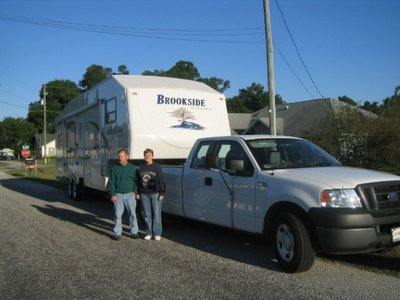
Our Home on Wheels

About Me

My photo
We took early retirement from careers as Executive Assistant (Joyce) and Lawn Care company owner (Wiley). We have been full-time RV'rs since March, 2006. We've taken our RV to Maine, Michigan, California, North Carolina and everything in between. We live in Florida in the winters and travel in the summers. It's a tough life, but someone has to live it!